
Sonars on submarines? Clear signal for spying? Max Alper digs in to the military origins (through funding research and designing) of audio technology that's staple to music creation today.
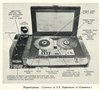
The year is 1945, the end of World War II is in full swing, with the Allies pulling out all stops to seize the remaining Nazi territories and gather as much intelligence as possible. Since two years prior, the Allies were aware of a new recording studio method, developed by the Germans, that could replicate clean and detailed sound quality for musical and propaganda purposes. U.S. Army Signal Corps engineer Jack Mullin, stationed in Paris, was tasked with learning as much as he could about these new audio developments. While on assignment in Frankfurt, Jack was invited by British troops to listen to a tape recorder at the recently liberated Radio Frankfurt studios. The tape machine was called a Magnetophon, originally designed in the early 1930s by AEG and perfected by the 1940s under regime supervision. The sounds described by Mullin were unlike anything he’d ever experienced. “I really flipped. I couldn't tell whether it was live or playback. There simply was no background noise."

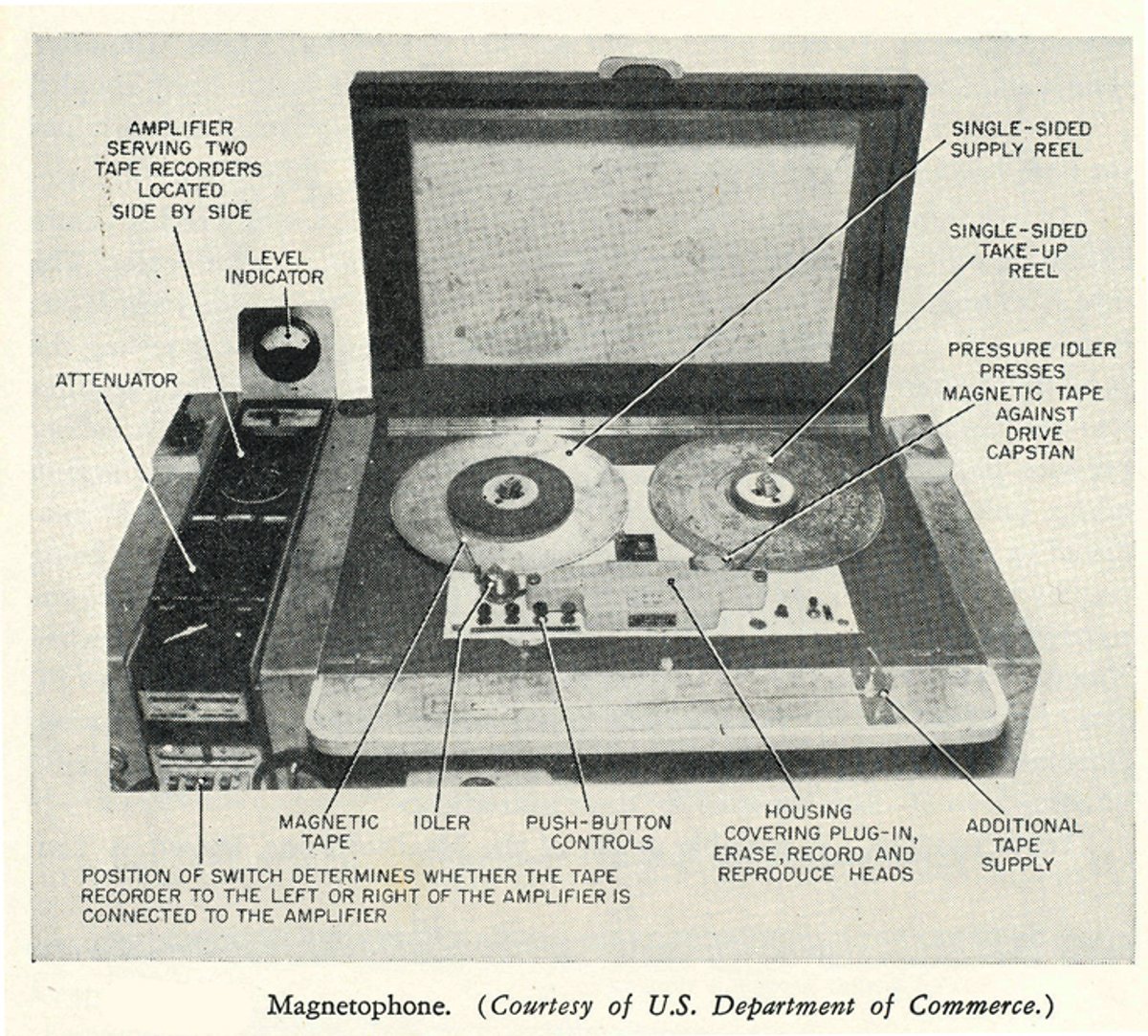
When the war officially ended, Mullin was allowed to bring two of these Magnetophons back to the states with him as war souvenirs, allowing him to further develop magnetic tape recorder technology for the next two years. His developments ultimately got him hired as chief audio engineer for Bing Crosby, who became the first musician to commercially release music recorded to tape, setting a new industry standard for all commercial record releases. Somehow, within a course of a decade, an effective Nazi propaganda tool had managed to redefine international popular music culture for the 20th century.
The popularization of magnetic tape recording is one of many examples of pivotal audio technology developed with military backing and made popular through the recording industry. When we expand our definitions of signal processing beyond the musical, we begin to realize just how crucial audio communications are in global military operations, so much so that the military is often the reason a particular device becomes commercially available at all. The ability to duplicate and amplify crystal clear sound over a large area, to analyze a synthetic waveform, as well as maintaining a steady signal without interference and distortion, are commonplace production techniques that at one point were pivotal for tactical operations.
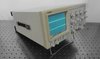
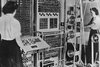
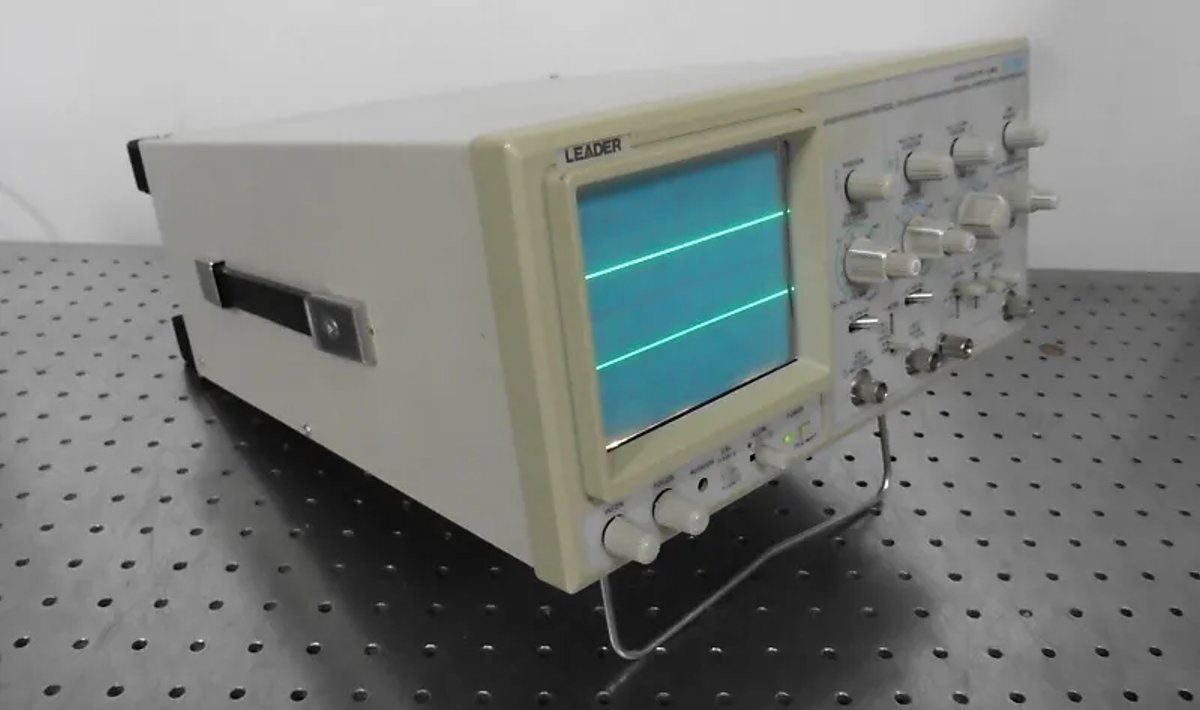
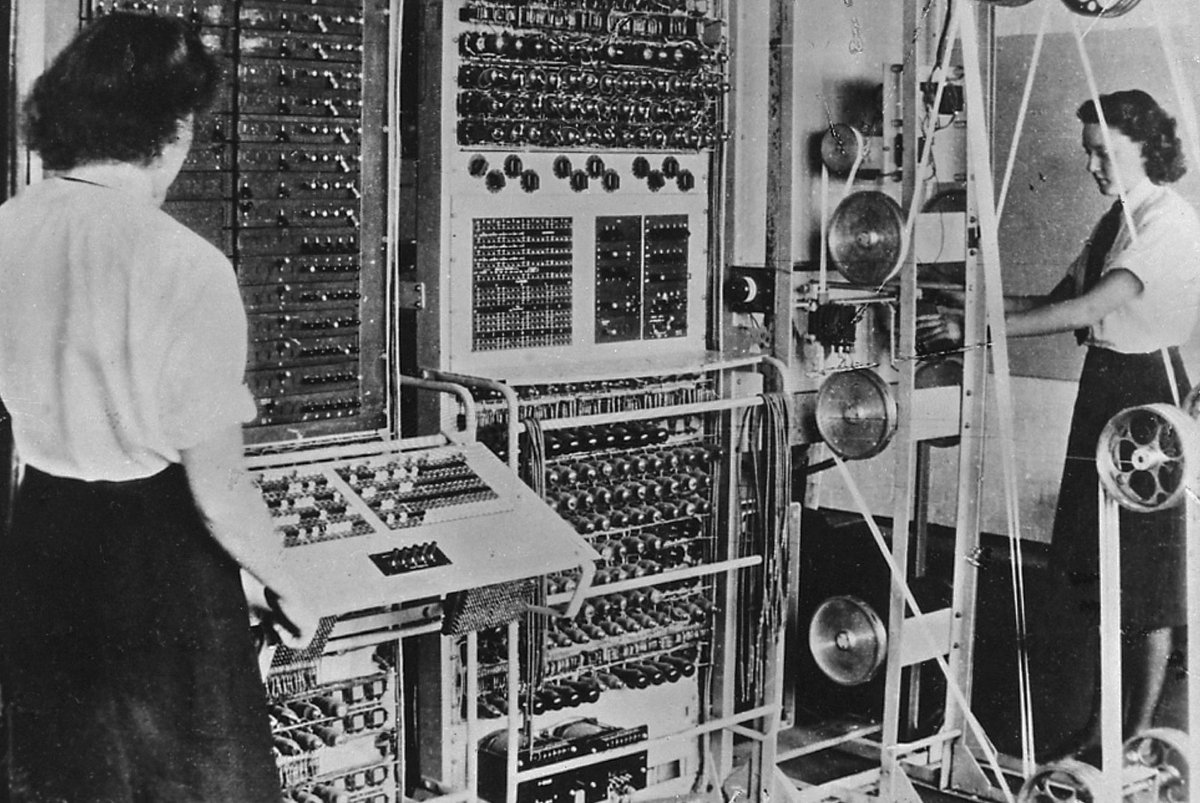
Oscilloscopes have played a crucial role for scientists and artists alike in their ability to visually depict frequency signals in waveforms on an X/Y graph. They have become essential for commercial and academic synthesists in deciphering new electronic timbres and sound designs through both sonic and visual attributes. One of the earliest developments of oscilloscope technologies was through the Colossus Project, the world’s first digital computer. The Colossus was designed in the early 1940s U.K. for a single purpose: to decipher Hitler’s encrypted audio messages, or radioteletypes, he sent to his advisors. These encryptions arrived as specific frequency sets of sawtooth waves. It was through the Colossus algorithms that waveforms were assigned a visual representation, which were then assigned a verbal definition. The ability to turn a frequency into data, whether it be audio, visual, or text, is all but taken for granted by digital artists. And it started with World War II codebreakers trying to listen in on Hitler.
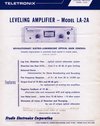
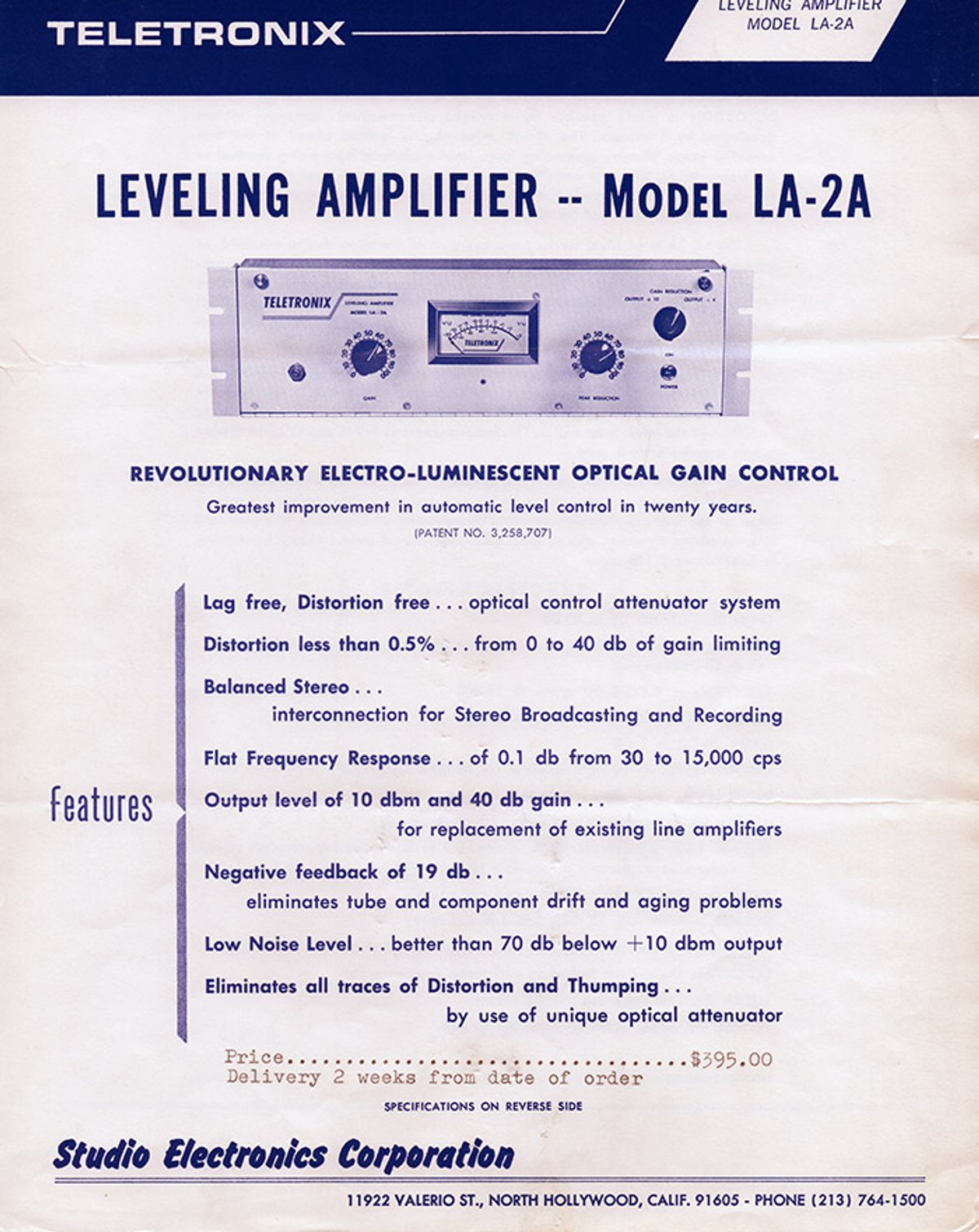
The ability for an amplifier to maintain a consistent audio level is by all means expected for any contemporary commercial model, whether it be analog or digital. The optical sensors invented to create this “leveling” signal process, however, were first designed during the Cold War by the CalTech Jet Propulsion Laboratory (JPL) in the early 1950s. A World War II radio operator turned electrical engineer named Jim Lawrence created a set of optical sensors for the JPL Titan Missile Project as a way to steadily detect incoming signals. Lawrence would later go on to apply these very same techniques to custom-made amplifiers used for radio broadcast, his primary passion. At the time, the constant need to ride the gain stage levels of commercially available amplifiers in order to maintain a steady signal was a major frustration for radio engineers like Lawrence. By implementing the same optical sensors he invented at the JPL, Lawrence laid the groundwork for what would, by 1958, become a standard rack mount device for recording studios around the world: the Teletronix LA-2A Leveling Amplifier. From missile detection sensor to rock’n’roll studio essential in less than ten years, who would have thought?
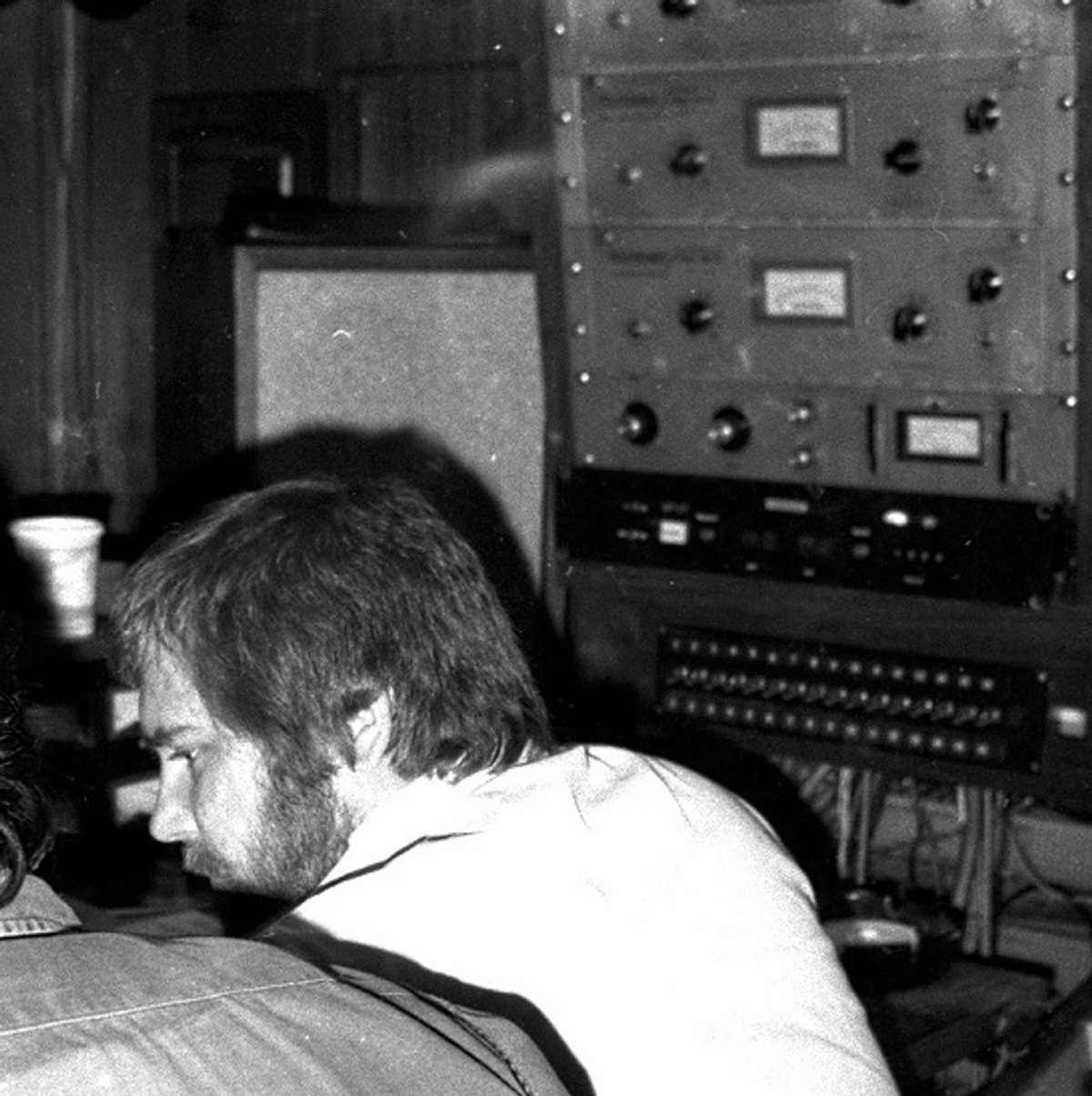
Skip Juried, in Session, with four Teletronix LA-2A Leveling Amplifiers at Sound Exchange Studios, NY. Photo Courtesy of Chris Juried (via History of Recording)
These are but a few of many examples of the intersection between the recording arts and tactical operations. If we are to continue utilizing the offspring of these essential creative tools, whether they be digital compressors, visualizer algorithms, Eurorack modules, or even that flashy Walkman reissue at Urban Outfitters, it’s crucial we as both artists and consumers understand the loaded geopolitical histories behind these devices. Next time you scroll Reverb endlessly for that rare, sought-after piece of vintage gear, consider who or what its initial purpose may have served. You’d be surprised.

